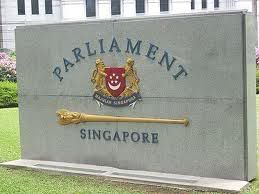
This was the speech I delivered in Parliament on 5 February 2013, during the debate on the Government’s Population White Paper.
———————–
Madam Speaker,
Over the past decade, Singapore’s population has grown by over 1.2 million people to reach 5.3 million last year. While GDP growth figures were rosy for most of the past decade, income inequality has risen significantly. The wages of the bottom income earners were held down in part by the influx of foreign labour while higher income earners enjoyed huge gains in their income and wealth during this period.
The much-anticipated White Paper on Population projects population growth of another 1.6 million, largely through immigration and foreign workers, over the next 18 years to reach up to 6.9 million by 2030. The Paper positions population growth as necessary for economic growth. Singaporeans are then given a Hobson’s choice: Accept more new immigrants and foreign workers, or face a declining economy and lower quality of life.
This is a false dilemma. In my speech today, I will explain how I believe we can stabilise the population size, while improving our economic dynamism and ensuring a more sustainable Singapore for future generations to enjoy.
The White Paper sets a goal for Singapore to become a “leading city” that can attract talent and enterprise, and set the pace for other cities (White Paper 2013, 16). It is this goal that seems to be driving the GDP growth target of 3 to 5% per year. This GDP growth probably cannot be achieved by productivity growth alone, so a high rate of mostly foreign labour force growth is needed. This in turn will drive up our population size.
Does being a leading city or global city improve the quality of life of all Singaporeans? Global cities attract many young migrants from their hinterlands and around the world. Even though their fertility rates are low, their populations continue to increase through immigration. But it is expensive to live in a global city. Many cannot afford to live in such expensive places upon retirement, so they move to other parts of their country with lower costs of living.
Will our retirees have such options when they are too old to work, since Singapore does not have any hinterland to speak of?
The cost of population growth
The Government needs to better explain to Singaporeans not only the benefits of population growth, but also the attendant costs that citizens will have to bear. With a larger population, businesses benefit from a larger pool of customers. Their profits increase, and their owners, top managers and shareholders reap the dividends and bonuses.
On the other hand, the negative effects of population growth are mostly borne by ordinary citizens. They have to suffer through overcrowded MRT trains, buses and public spaces. They continue to pay high prices for housing. They have to compete for jobs with foreigners, and their wage expectations must be lowered in order to remain competitive. The higher transportation demand pushes up COE prices, which puts cars out of reach for many. Taxpayers also have to bear the cost of infrastructure development to accommodate a larger population.
Has the Government calculated overall cost per new immigrant compared to per capita benefits which accrue to citizens? The Government has spelled out the expected GDP growth, but has it done any projections for real income growth of workers come 2030?
Productivity as a driver of growth
For the last decade in Singapore, GDP growth has been driven mainly by labour inputs. The generous supply of foreign workers has lowered the bargaining power of local workers, forcing them to accept lower wages in order to be competitive. This has led to much of the benefits of our stellar GDP growth accruing to company profits instead of workers’ wages. Our workers’ wage share as a percentage of GDP is relatively small compared with most other developed countries. In 2011, just 42.3% of Singapore’s GDP went to workers’ wages (SingStat 2012, 9). In contrast, according to OECD data, the wage share is 47.5% in Australia, 49.2% in the European Union and 52.3% in Canada (OECD 2011). If companies here continue to rely heavily on foreign workers, there will be little incentive for employers to think hard about ways to boost productivity.
But if growth is driven mainly by productivity gains, it would lead to higher real wage increases for workers. In a tight labour market, companies will need to pay their local workers more to retain them, as well as to restructure themselves to become more productive. Therefore higher productivity growth is critical for our next phase of growth, and we should not let up in our pursuit of our productivity targets.
WP’s population proposal
Our population has grown from about 3 million in 1990 to 4 million in 2000 to 5 million in 2010. This is an increase of about 1 million per decade. The White Paper projects the population to continue growing by about the same quantum. It is projected to grow to almost 6 million by 2020 and almost 7 million by 2030. What will happen after 2030? Will we grow to 8 million in 2040 and 9 million in 2050?
I am concerned that the Government seems to be proposing a “population growth forever” model, whereby each successive generation requires a larger workforce to keep expanding the GDP. This is simply not sustainable.
Our population will eventually reach the limit of our island’s space. Eventually all the reserve land will be used up and we would have reclaimed land to its limit. When that happens, we will have to settle for zero population growth because of constraints in Singapore’s physical size.
If we head down the path spelled out in the White Paper, as we approach 2030 we will again be debating about how to maintain economic growth without growing our population. The main difference then is that we would be bursting at the seams with close to 7 million people crammed on this island. We will have much less room for error in planning. That would be a truly worrying situation.
It would be more responsible to restructure our economy now to grow with fewer labour inputs, than to leave it to future governments to deal with this problem.
We need to start planning for an economy that assumes a stabilised population, rather than to rely on perpetual increases in labour through immigration and foreign workers. We must invest more in developing the skills of our people, improving our technology and investing in more capital so as to be able to increase productivity and raise wages.
The Workers’ Party is proposing a more moderate pace of growth of our labour force, compared to what the Government has planned in its White Paper. We envision a workforce which grows mainly through local instead of foreign labour force growth.
Madam Speaker, with your permission, I would like to request the Clerk to distribute a table listing our projected GDP, labour force and population growth numbers. (Click here for table.)
We will target to increase our local labour force growth by up to 1% per year from now until 2030. We should strive to keep our foreign labour force constant between now and 2020, depending on our success in growing the local labour force. It does not mean that we shut the doors to foreign workers. Instead, new work passes will be issued only to replace expiring work passes or to supplement shortfalls in the local labour force. Companies will have to find ways to hire more Singaporeans.
How will we grow our resident labour force if the number of new entrants is not increasing due to declining fertility trends? One way would be to increase our labour force participation rate, so that more residents of working age are encouraged to work. The Labour Force Survey 2012 found that there are 418,000 economically inactive residents of working age, of which 90,000 are willing to work. This is a valuable pool of labour that can be tapped.
With slower labour force growth, our economy will rely mainly on productivity improvements to grow. If the Government meets its 2 to 3% per year productivity growth target, we could enjoy 2.5 to 3.5% GDP growth per year up to 2020, which is far better than the 1.2% we achieved last year and the 1.8% average achieved by OECD countries in 2011.
Between 2020 and 2030, if we maintain labour force growth of 1% per year, and productivity grows by the Government’s 1 to 2% target during this period, this will generate 1.5 to 2.5% GDP growth per year, which is in line with the growth rates of most mature economies.
In this scenario, we are looking at a projected population of 5.3 to 5.4 million by 2020, and 5.6 to 5.8 million by 2030. This is significantly lower than the 6.5 to 6.9 million that the Government is projecting by 2030. More importantly, we will not need so many foreign workers and immigrants to supplement the local labour force, which will help us better preserve the Singaporean core.
What would be the trade-offs of having a slower inflow of foreign workers? The Singapore Business Federation has said that slower labour force growth in Singapore will have “devastating consequences for many companies” and that if businesses go under, jobs will be lost and Singaporeans will be affected (CNA 2013).
I empathise with the concerns of many businesses, especially SMEs, which will be impacted by further curbs in foreign labour. For many businesses it will mean lower profits, as they will need to pay higher wages to their Singaporean workers to attract and retain them. However, companies which are dependent on low wage foreign labour will face the greatest difficulties and will have to restructure.
Economic restructuring is painful but it is critically important for our nation’s future. The Government should commit to supporting companies and workers through the restructuring process, as well as retraining workers to provide them with the right skills to make a transition to another industry.
Conclusion
Madam Speaker, the Population White Paper proposes a population policy that continues to increase our reliance on foreign labour, leading to large increases in our population, which is unsustainable in the long run. I cannot accept this as the roadmap to address Singapore’s demographic challenge, and therefore I oppose this motion.
The Workers’ Party instead proposes a plan which places less emphasis on foreign workforce growth and focuses more on local workforce and productivity growth. This will increase the dynamism and real incomes of our local workers, while putting Singapore on a path towards more stable and sustainable population growth trajectory. Under the Workers’ Party’s plan, I am confident we will have a more dynamic population for a sustainable Singapore.
References
Channel NewsAsia (CNA). 2013. “Slower workforce growth will severely impact businesses: SBF”. 31 January 2013. Kristie Neo.
Economist Intelligence Unit (EIU). 2012. “A Summary of the Liveability Ranking and Overview”. August 2012.
Ministry of Manpower (MOM). 2013. “Labour Force”. Retrieved from http://www.mom.gov.sg/statistics-publications/national-labour-market-information/statistics/Pages/labourforce.aspx.
Organization for Economic Cooperation and Development (OECD). 2011. OECD.StatExtrats. Retrieved from http://stats.oecd.org/.
Saw, Swee-Hock. 2007. “The Population of Singapore”. Second Edition. ISEAS Publishing: Singapore.
Singapore Department of Statistics (SingStat). 2012a. “Key Annual Indicators”. Retrieved from http://www.singstat.gov.sg/stats/keyind.html.
Singapore Department of Statistics (SingStat). 2012b. “Singapore in Figures 2012”. Retrieved from http://www.singstat.gov.sg/pubn/reference/sif2012.pdf.
White Paper. 2013. “A Sustainable Population for a Dynamic Singapore”. Singapore Government.