Comments to Wanbao about Singapore’s social welfare system

The local Chinese evening daily, Lianhe Wanbao (联合晚报), emailed me earlier this week to ask for my comments on Singapore’s social welfare system. This was with reference to the article in The Economist (“The stingy nanny”), which I blogged about on 15 February. The Wanbao article appeared this evening.

The following are my responses to the reporter’s questions: Continue reading “Comments to Wanbao about Singapore’s social welfare system”

The Economist calls Singapore a ‘stingy nanny’

The respected British weekly, The Economist, has published a cutting criticism of Singapore’s social safety net in its latest edition dated 13 February 2010, titled “Welfare in Singapore: The stingy nanny”. Here are some excerpts.

The respected British weekly, The Economist, has published a cutting criticism of Singapore’s social safety net (or lack thereof) in its latest edition dated 13 February 2010, titled “Welfare in Singapore: The stingy nanny”. Here are some excerpts:

Citizens are obliged to save for the future, rely on their families and not expect any handouts from the government unless they hit rock bottom.
In government circles “welfare” remains a dirty word, cousin to sloth and waste.
The most destitute citizens’ families may apply for public assistance; only 3,000 currently qualify.
Applicants complain that the process of seeking help is made tiresome and humiliating. Indeed that could be the point, supposing it deters free-riders.
But the thinness of the safety net also reflects a widespread article of faith, recited and reinforced over the years. Even among the social workers who work in hard-hit communities there is surprisingly little frustration at the meagreness of the handouts on offer or at the lengthy application process.
In 2008 the World Bank rated it the third richest country in the world, in terms of GDP per head at purchasing-power parity. And the idea that its Big-Brotherly government might be outfoxed by conniving welfare queens seems odd.
Lee Kuan Yew, Singapore’s founding father and still its “minister mentor” has maintained that ambitious migrants help to keep citizens on their toes. In an interview given to National Geographic last July he said that if native Singaporeans lag behind “hungry” foreigners because “the spurs are not stuck on [their] hinds”, that is not the state’s problem to solve.
The Economic Society of Singapore (ESS)—not exactly a radical cell—recently proposed to a government committee that it should build a more robust safety net, starting with unemployment insurance. This would promote social stability and help muster public support for Singapore’s open-door migration policies, it argues. Properly designed, such measures would not create disincentives to work and thrift. “While self-reliance is a good principle in general, it may be neither efficient nor just if taken to extremes,” noted the ESS.

Citizens are obliged to save for the future, rely on their families and not expect any handouts from the government unless they hit rock bottom.

In government circles “welfare” remains a dirty word, cousin to sloth and waste.

The most destitute citizens’ families may apply for public assistance; only 3,000 currently qualify.

Applicants complain that the process of seeking help is made tiresome and humiliating. Indeed that could be the point, supposing it deters free-riders.

But the thinness of the safety net also reflects a widespread article of faith, recited and reinforced over the years. Even among the social workers who work in hard-hit communities there is surprisingly little frustration at the meagreness of the handouts on offer or at the lengthy application process.

In 2008 the World Bank rated it the third richest country in the world, in terms of GDP per head at purchasing-power parity. And the idea that its Big-Brotherly government might be outfoxed by conniving welfare queens seems odd.

Lee Kuan Yew, Singapore’s founding father and still its “minister mentor” has maintained that ambitious migrants help to keep citizens on their toes. In an interview given to National Geographic last July he said that if native Singaporeans lag behind “hungry” foreigners because “the spurs are not stuck on [their] hinds”, that is not the state’s problem to solve.

The Economic Society of Singapore (ESS)—not exactly a radical cell—recently proposed to a government committee that it should build a more robust safety net, starting with unemployment insurance. This would promote social stability and help muster public support for Singapore’s open-door migration policies, it argues. Properly designed, such measures would not create disincentives to work and thrift. “While self-reliance is a good principle in general, it may be neither efficient nor just if taken to extremes,” noted the ESS.

————

Continue reading “The Economist calls Singapore a ‘stingy nanny’”

What’s missing from Economic Strategies Committee report

These are just a few proposals that could help SMEs and entrepreneurs in Singapore. I believe that growing our local private enterprises holds the key to our next phase of economic growth, which unfortunately the ESC has overlooked.

I read through all 53 pages of the much-awaited Economic Strategies Committee’s (ESC’s) main report, which is supposed to “chart the course for Singapore’s economic development over the next decade”. The report proposed ways of increasing productivity and expanding our international economic footprint. It then shifted gear to talk about how to make Singapore a more attractive destination that rich and internationally-mobile “talents” would want to call home. The report’s areas of study are summarised in the diagram below.
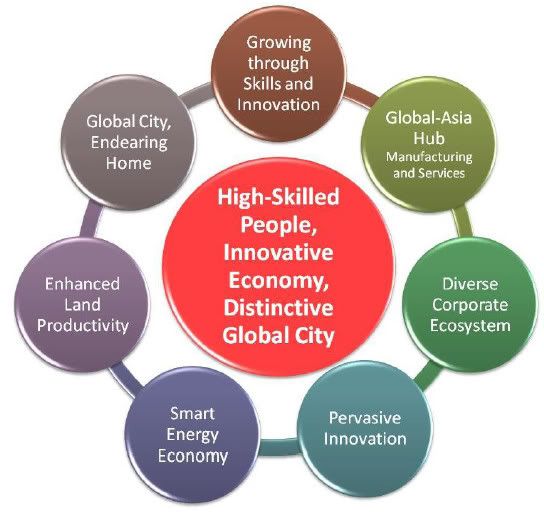
ESC

While I appreciate the work that the committee members (or rather, their secretariats) have put in, I felt that the recommendations were too skewed towards boosting high-end growth of large corporations, with insufficient emphasis on growing the sector that is in the best position to generate broad-based growth for Singaporeans — small and medium-sized enterprises (SME).

To be fair, the ESC did present a few proposals for growing SMEs:

1. Develop stronger alliances between large and small players to promote technology transfer, test-bedding and commercialisation. Provide incentives for MNCs to co-develop innovative products and services with SMEs, helping Singapore-based companies build credible track records, enhance innovation and accumulate knowledge capital.

2. Catalyse the supply of growth capital for growth-oriented SMEs based in Singapore, through seeding public-private co-investment funds.

3. Enhance access to human capital for SMEs, which usually face more difficulties in attracting and retaining talent, through broadening the scope of internship programmes and facilitating a ready network of mentors to provide strategic and expert advice.

I think the ESC’s proposals for helping SMEs are too peripheral and are hardly enough to generate much growth in our domestic private sector. Without significant growth in our SMEs, we will continue to be at the absolute mercy of the winds of the global economy, as this last recession has demonstrated.

SMEs as a key engine of growth

Singapore cannot continue to depend so heavily on manufacturing exports and foreign MNCs to power our economy, when many MNCs are making plans to relocate to cheaper locations. We need to develop new engines of growth that are sustainable and benefit ordinary Singaporeans, not just foreigners and rich elites. The domestic private sector could form this new growth engine.

To achieve broad-based growth, it is critical that we help local enterprises prosper. This will not only benefit the national economy, but countless individual Singaporeans as well. SMEs make up 99 per cent of business establishments in Singapore and employ 56 per cent of all workers here. Many of those with lower paper qualifications are only able to find work in SMEs, as they do not possess the skills that many MNCs demand. SMEs tend to cater more to local consumers and businesses, and so are less likely to shut down and move to lower cost countries — taking all their jobs, intellectual property and technical know-how with them — when economic winds shift.

While SMEs employ 56 per cent of the workforce, they contribute only 42 per cent of Singapore’s GDP. Their comparatively lower output is due to many factors, including a lack of economies of scale, international connections to market their goods, access to financing and a shortage of talented workers willing to work for them instead of MNCs.

So far, the government’s efforts to specifically help SMEs have focused on training programmes for SME managers and the grooming of a few SMEs which are deemed to have the potential to become home-grown MNCs. The result is that a few enterprises receive a disproportionate amount of funding and assistance from the government, while those that really need the help get very little.

The government should dispense of its habit of “picking winners”. Instead, more effort should be put into attracting venture capital (VC) funds to our shores. These private sector investors can provide a greater amount of funding that start ups need to bring their ideas to market. VCs are more in touch with the market than civil servants are, so they are in a better position to assess the investment potential of start ups. Also, the risk of failure is spread out among many VC firms. So even if one VC makes a wrong investment, the fallout will be more limited than if a government agency makes a huge bet on an industry which ends up in utter failure.

Developing an entrepreneurial culture

Entrepreneurship is the bedrock of SMEs. Without entrepreneurs starting small businesses, there would be no SMEs to speak of. Thus, increasing the number of entrepreneurs and their success rate will directly contribute to the growth of SMEs.

The government has a few training programmes to support entrepreneurs. However training alone will not help Singapore reach the tipping point of entrepreneurship. For this to happen, a culture of entrepreneurship needs to be developed among not just working adults, but has to start from young with students and their parents.

The entrepreneurial culture in Singapore is weak, especially when compared to other developed economies like Taiwan, Korea and the US. The recent Global University Entrepreneurial Spirit Students survey (GUESS) of 2,300 students from local tertiary institutions found that only 18 per cent of them intended to start their own businesses after graduating. In contrast, a whopping 69 per cent planned to take up salaried jobs.

We need a mindset shift in our society regarding what constitutes career success. Our current education system is too geared towards preparing students to be good employees, not entrepreneurs. Most local students strive to ace their exams so they can get into good universities and land a stable, well-paying job working for some large firm or the government.

Entrepreneurs require a very different skill set from salaried workers. A business owner needs to do a lot of selling and marketing of one’s goods or services. This takes a lot of innovation, confidence and humility — all skills which our schools have not adequately prepared our young for.

The stigma of failure in our culture needs to be changed. There needs to be a greater tolerance for those who stumble while trying. A lot of the “afraid to fail” mindset originates from our education system, where examination results define a student’s success or failure.

Schools should see it as their mission to nurture future business owners, not just salaried workers. They should start teaching the basics of running a business, like managing cash flow and selling, early in secondary school. Our young should be brought up with the mindset that the brightest and most capable students start their own company after graduating (or more likely the other way around), rather than win government scholarships or work in MNCs.

Parents often frown on their children taking the entrepreneurial path, as it is seen as more risky and less likely to guarantee financial success. To counter this, schools could consider tying up with business associations to conduct seminars for the parents, to explain the motivations behind what their children are learning, so that parents too can catch the vision about entrepreneurship and encourage their children to pursue that as a career.

Conclusion

These are just a few proposals that could help SMEs and entrepreneurs in Singapore. I believe that growing our local private enterprises holds the key to our next phase of economic growth, which unfortunately I feel the ESC has overlooked.

Foreigners pay more, but what’s in it for Singaporeans?

In its latest political move in preparation for the election, the PAP government has decided to reduce health subsidies given to Singapore permanent residents (PRs) by 10% this year and another 10% in 2011.

This comes hot on the heels of the recent increase in fees for PRs and foreigners studying in local schools. Back in 2008, the Ministry of Health had already reduced the PR subsidy in hospitals by 10% and completely eliminated the subsidies for non-PR foreigners. The government claims that these moves are to “make a sharper distinction between the privileges a citizen is entitled to, as compared to a PR”.

I fail to see how all this benefits Singaporeans. Are Singapore citizens now going to pay less when they are admitted to hospital or attend local schools? No. Is the PAP expecting Singaporeans to rub their hands with sinister glee, as they rejoice that their PR counterparts are paying more? I don’t think Singaporeans are that vindictive.

Therefore my conclusion is that this is simply a pathetic attempt to lull Singaporeans into thinking there is actually a significant distinction between the position of foreigners and Singaporeans in this country. Secondly, it seems this is another revenue-raising exercise for the government, since there has been no mention that the money saved in subsidies is going to feed into any programme that benefits Singaporeans.

If the government was really sincere about treating Singaporeans better, they would reduce the fees that Singaporeans are paying for government services, instead of punishing foreigners for political gain.

Why I joined the Opposition

It has been just over a year since I joined the Workers’ Party as an ordinary member. Although I declared months ago in the “About Me” section of my blog that I am a WP member, this will mark my first full blog post about my involvement with the opposition.

It has been just over a year since I joined the Workers’ Party (WP) as an ordinary member. I must say that the past year has probably been the most exciting and eventful year of my life, and there is every indication that the year ahead will top that. Although I declared months ago in the “About Me” section of my blog that I am a WP member, this will mark my first full blog post about my involvement with the opposition.

I wasn’t always an opposition supporter. I have no history of oppositionists in my family and most of my friends and teachers from school days knew me as someone who always followed the rules and did not question authority. Many, therefore, have expressed surprise that I have taken the plunge into opposition politics.

I first got interested in current affairs during my undergraduate days at the University of Southern California in the United States in the late nineties, where I majoring in electrical engineering. Although the level of political apathy on campus was still high compared to that of previous generations of students, it was enough to help me to see that what happened in the political realm had a huge impact on everyone’s life, including my own.

I brought my interest in politics back to Singapore when I returned in 1999 to serve my National Service. Back then, I used to think that being part of the PAP government machinery was the only way to effect positive change in Singapore. This was a reason why I made a drastic career switch from my first job as an IT consultant to work in the Ministry of Foreign Affairs (MFA) in 2005. It was also why I had volunteered for more than seven years as a youth leader in South West Community Development Council, which I have since resigned from.

Ironically, it was during my time in the civil service that my eyes were opened to the reality that Singapore needs a stronger opposition in order to ensure better governance for our future generations.

The civil service is generally a very well-run organisation, with many intelligent, competent and committed officers at all levels of the hierarchy. As a political desk officer in MFA, I had the privilege of interacting with a diverse array of officials—fellow policy officers, protocol officers, management support officers, permanent secretaries, ambassadors, ministers, and officers from other ministries like the Ministry of Trade and Industry and IE Singapore.

I made a number foreign visits during my stint in MFA, usually staffing ambassadors and ministers in small delegations. This gave me an opportunity to have lots of personal interaction with them and get a sense of how they thought about issues away from the glare of the media. I remember occasionally even getting into debates with them, sometimes over the PAP’s lack of commitment to democratic principles and fair play. During one such debate, over drinks on evening in a foreign capital, I recall the wife of the ambassador turning to my director and telling him, half in jest: “Don’t suppress that idealistic spark in him!”

Fortunately my director didn’t suppress my idealism, not that I displayed much of it after that—it is generally not career enhancing to have a reputation for being too idealistic in the Singapore civil service, where hard-nosed pragmatism is a prized asset. But I realised that despite its efficiency and professionalism, the civil service can only help fulfil the political objectives of the party in power. It cannot change those objectives, because it has neither the power nor the mandate to do so. Policy directions are set by politicians in the ruling party. (By policy directions, I’m referring to issues like whether or not Singapore should provide a universal social safety net for needy Singaporeans, not whether the Public Assistance grant should be $360 or $400.)

My friends in the PAP tell me that it is more effective to change Singapore from within the PAP than from outside. I believe that changes to the finer details of policies are possible from within, but fundamental changes to the way the country is governed can only come if the top echelon of leaders in the party either radically change their mind, or are replaced. Neither is about to happen anytime soon.

The pace of change from within will be too slow to meet the challenges of this fast moving world. Our country cannot afford to allow our competitors to pass us by or for our income divide to reach dangerous levels, while we wait for some senior gentlemen at the top to pass from the scene.

The need for an effective opposition

The PAP has conditioned Singaporeans to see the political opposition as a destructive force in society. They routinely accuse the opposition of “playing politics”, engaging in “unconstructive criticism” and “opposing for the sake of it”. These are very untrue and damaging characterisations.

In the United Kingdom, where we inherited the Westminster Parliamentary system from, the official title of the largest alternative party is “Her Majesty’s Loyal Opposition”. This implies that the opposition opposes the government—“Her Majesty’s Government”—and its policies, but not the state, as represented by the monarch.

Even while the PAP remains in power, there is a useful role for the opposition to play. The opposition can use its platform in Parliament to apply pressure on the government to change policies which are not serving Singaporeans well. As much as the PAP wants to portray itself as impervious to public pressure, the reality is that when they know that there is a real threat to their support at the next elections, they will have to bow to public pressure built up by the opposition.

This is the beauty of genuine political competition. Just like how commercial competition forces businesses to work harder, become more efficient and provide better services to woo their customers, political competition will force the ruling party to focus more on bettering the lives of all Singaporeans in order to earn their votes.

I joined the WP because I believe Singapore needs an alternative leadership that is capable of taking over the reins and steering our country to its next level of development, should the PAP stumble. This will ensure that Singapore will continue to prosper and thrive even without the PAP in power. I believe the WP has the potential to be that alternative government in the future, and I want to play my part to contribute to its growth and development. I hope to be able to help my party sharpen its policy proposals and broaden its outreach to Singaporeans who are not usually interested in politics.

I am under no illusions that the road ahead as an opposition activist will be long and fraught with obstacles, not to mention minefields. Many who have gone before me have paid a heavy price for their ideals. Some have lost everything they had, except their dignity. All Singaporeans are heavily indebted to these heroes, whether or not they realise it.

I hope I will not have to suffer political persecution like these heroes did, but I know many things are beyond my control. I therefore ask my friends and readers for their prayers and support, as I take my first of many steps in this long march towards building a better Singapore for all Singaporeans.

————–

Dear readers, thank you for all your kind comments and words of support. My team and I cannot fight this fight alone. We need YOU! Please click here to find out how you can join me in this cause.

YouthQuake 6 – The Influence of Online Media on Singaporean Youths

The Workers’ Party Youth Wing will be holding its sixth session of its YouthQuake series this Saturday at the Workers’ Party HQ.

The Workers’ Party Youth Wing will be holding its sixth session of its YouthQuake series this Saturday.

Speakers:

Making Sense of Virtual Reality – Agenda, Audience, Action
By Elvin Ong, 24, SMU Business Undergraduate
Elvin will explore the question to what extent can online media in the virtual world motivate people to take action, in particular, political action, in the physical world?

Fighting in the Trenches: The New Media Jungle
By Terence Lee, 23, NTU Communications Undergraduate & News Editor of The Online Citizen
Having served as a writer, reporter, and editor of The Online Citizen, Terence will share unique and penetrating insights of his dip into the public sphere, some which he picked up the hard way.

Implications of Singapore Law on Online Media
By Sangeetha Yogendran, 23, NUS Law Undergraduate
Sangeetha will be examining the rights one has regarding online media, focusing on censorship and defamation laws. She will also examine the potential implications of the cooling-off day and talk about whether the current laws should be changed in this new online era.

Too Much of Anything is Poison
By Ruth Komathi, 19, TP Psychology Student
Ruth will be exploring the increasing usage of online media and its detrimental effects when used in excess.

Event details:

Date: Saturday, 16 January 2010

Time: 14:30 – 17:00

Venue: Workers’ Party Headquarters, 216-G Syed Alwi Road #02-03 Singapore 207799

To register, please contact Bernard Chen at bernardchen@wp.sg.

Silver lining in the church attacks

It seems these unfortunate incidents are forcing many Malaysians into a time of introspection. The reset button on race relations will have to be hit. Hopefully cool heads will prevail over impetuous acts of bigotry. This could the the silver lining in this whole sad saga.

I feel sad for our neighbour, Malaysia, for what happened over the past few days, with four churches coming under arson attack, presumably linked to the controversial “Allah” ruling by the High Court. According to reports, this is the first time in the history of the country that churches have come under attack of this sort. Even through the turbulent period of the 1960s, including the 1969 race riots, houses of worship were deemed sacrosanct. All that has been shattered now.

The Metro Tabernacle Church, a 1,500-member Assembly of God church in the Kuala Lumpur area, had its first floor 80 per cent destroyed by the fire. According to the KL police chief, the perpetrators broke all the glass window panels on the ground floor of the building before pouring petrol into the building and setting it alight. Three other churches in the Klang Valley — the Catholic Church of Assumption in Kuala Lumpur, Life Chapel Church in Petaling Jaya and Good Shepherd Lutheran Church in Petaling Jaya — were also torched, although none seriously.

It goes without saying that these fanatical crimes deserve to be condemned in the strongest terms possible. I find it rather insensitive that demonstrations at some mosques against the High Court’s ruling still went ahead on Friday after the arson attacks happened, although according to Marina Mahathir, the turnout was lower than expected.

Despite the reprehensible actions of a few individuals, it is reassuring to see so many prominent Malaysians speaking out strongly against these attacks. PAS, the opposition Islamic party, has been particularly forceful in its condemnation. Their spiritual leader Nik Aziz Nik Mat said the culprits behind the attacks are committing a sin and will reap what they sow, while their president, Abdul Hadi Awang, called the firebombings “uncivilised” and against Islam. Prime Minister Najib Razak has announced a government allocation of RM500,000 to rebuild the Metro Tabernacle Church. Even UMNO Youth Chief Khairy Jamaluddin, who is better known for his firebrand comments defending Malay rights, said that this was a “despicable act” and that this is “not the Malaysia I know”.

It seems these unfortunate incidents are forcing many Malaysians into a time of introspection over how a dispute over semantics could have boiled over into attacks of this nature. The reset button on race relations will have to be hit. Hopefully cool heads will prevail over impetuous acts of bigotry. This could the the silver lining in this whole sad saga.

Military is no place for foreigners

I am of the view that non-Singaporeans should be prohibited from being members of our security services, especially the military.

Today’s newspapers were flush with stories of foreigners who are serving in the Singapore Armed Forces (SAF). The Straits Times highlighted some Russians, Chinese and Indian nationals, as well as Malaysians, who are serving in various leadership capacities in the SAF.

This uniquely Singaporean quirk has come about because our law requires children of first generation permanent residents (i.e., second generation PRs) to serve their National Service (NS) or forfeit their PR status. With the influx of foreigners into Singapore over the past 10 years and the liberal way in which PR status is dispensed to so many foreigners, it is inevitable that we are seeing many more foreigners donning camouflage green uniforms these days.

I feel that non-Singaporeans should be prohibited from being members of our security services, especially the Singapore Armed Forces (SAF). I know I am treading on sensitive ground by saying this, especially in the context of the debate between the privileges and obligations of citizens and foreigners in Singapore.

Continue reading “Military is no place for foreigners”

Training real “thinking soldiers”

The SAF’s idea for current affairs discussions between commanders and soldiers is something along the lines of what I suggested three years ago in an article written for Singapore Angle (reproduced on my blog) titled “Israel’s unprepared reservists: Could the thing happen to Singapore?”.

The Singapore Armed Forces (SAF) has planned a revamp of the Basic Military Training (BMT) programme. Apart from adjusting the length of BMT for several categories of less-fit recruits, the revamped BMT will also “teach military customs and traditions, and will set aside time for commanders and soldiers to discuss current affairs”.

According to TODAY, for the past two to three years, recruits have been encouraged to keep journals on their training and urged to write letters to their loved ones during “mail runs” on field training. This is part of the SAF’s efforts to engage the troops “intellectually and emotionally”, according to Chief of Army, Maj-Gen Neo Kian Hong.

MG Neo said that “rather than just teaching them, we are also telling them the reason behind it.”

The idea for current affairs discussions between commanders and soldiers is something along the lines of what I suggested three years ago in an article written for Singapore Angle (reproduced on my blog) titled “Israel’s unprepared reservists: Could the thing happen to Singapore?”.

Continue reading “Training real “thinking soldiers””

Fixing a problem that doesn’t exist

Why does this government have so much time on their hands to solve non-existent problems? When was the last time we had anything close to a riot on Polling Day? Not that I know of in the last 50 years. But perhaps our far-sighted government is preparing for a “freak event”.

When I first read the lead story in TODAY this morning, I thought to myself, “Oh no here they go again.”

True enough, the “proposal” (read: decision) by PM Lee to allocate a day before Polling Day as a “cooling-off period” had all the characteristics of a typical PAP election engineering hit job: Conjure up a problem that doesn’t exist, come up with some pleasant sounding proposal to “solve it”, play on the fears of Singaporeans, and then fix the Opposition while making it sound like it is fair and square because “the same rules apply to everyone”.

PM Lee said that, in addition to Polling Day, the day before will also be a campaign-free day — no campaigning except of course “news reporting” by the state-controlled media duopoly.

Continue reading “Fixing a problem that doesn’t exist”