Gerald Giam is the Member of Parliament for Aljunied GRC. He is the Head of Policy Research of the Workers' Party of Singapore. The opinions expressed on this page are his alone.
Outward Bound Singapore (OBS) recently announced that construction of their new campus on Coney Island has started. This led to no small amount of disappointment by some nature lovers about the potential loss of natural habits on the island. While I understand the noble objectives of OBS to build a “rugged society”, particularly among our youths, I am concerned about the construction of building structures taking place in our National Parks. Coney Island Park is not the only instance. In 2022, the HomeTeamNS Bedok Clubhouse will be “nestled” within Bedok Reservoir Park as well.
Concerned residents had highlighted this to me earlier this year during my house visits. I asked the Minister for National Development about this during the April 2021 sitting of Parliament. This was what he replied:
LIMITS IN PLACE FOR CONSTRUCTION OF BUILDING STRUCTURES ON LAND DESIGNATED AS NATIONAL PARK Sitting Date: 5-4-2021
Mr Gerald Giam Yean Song asked the Minister for National Development (a) what limits are in place for the construction of building structures on land designated as a national park; (b) why was Bedok Reservoir Park chosen as the site for the construction of the HomeTeamNS Bedok Clubhouse; (c) why Coney Island Park was chosen as the site for the construction of a second Outward Bound Singapore campus; and (d) whether facilities like these can be built outside national parks instead so as not to destroy green areas in the park.
Mr Desmond Lee: Compatible facilities are co-located in and near parks to provide park visitors with a wider range of amenities, while allowing users of these facilities to be closer to nature. When planning for such facilities, we assess whether they complement the park and if there is suitable space available. Such facilities are designed to be integrated with the surrounding landscape, and to minimise impact on greenery.
The HomeTeamNS Bedok Clubhouse site was selected to provide visitors to Bedok Reservoir Park with more amenities, while allowing waterfront access for activities conducted by the Clubhouse. To minimise impact to the park, the Clubhouse is located primarily on an open area. Its design is also kept fenceless and porous, with lush planting to retain the park ambience.
The site for the Outward Bound Singapore (OBS) campus at Coney Island was chosen as it is easily accessible to mainland Singapore and the other OBS campus at Pulau Ubin. The waterfront setting is beneficial for the running of outdoor educational programmes for our youth. OBS is working with NParks, nature groups, and various stakeholders to design the campus to fit into the character of Coney Island, and to enhance the greenery where possible.
The community spread of the B.1.617 Covid-19 variant in Singapore in recent weeks demonstrates that measures to prevent leaks of imported infections may not have been as “air tight” as previously assumed. It just takes one super-spreader entering the community to cause an outbreak. This puts lives of vulnerable persons at risk and has led to tightened social distancing measures, which in turn have taken a toll on livelihoods.
Have infection controls been sufficiently strengthened since to prevent further leaks of the virus into the community?
Currently, incoming travellers on self-isolation or serving SHN at a place of residence typically take private transportation, taxis or private hire cars from the immigration checkpoint to their place of accommodation immediately after their on-arrival Covid-19 PCR test — of which results take at least a day or two. Will this risk infecting the driver, who may unknowingly infect his or her subsequent passengers? Would it not be safer for all travellers serving SHN to have dedicated transport provided to their SHN facility or homes, with drivers decked in full PPE for their protection? I filed some of these questions for the Minister for Transport to answer at the next Parliament sitting.
I am glad the government has expanded its requirement for pre-departure PCR testing (PDT) within 72 hours before departure for Singapore. Malaysia recorded 9,020 new infections and 98 deaths as a result of Covid-19 on Sunday and the country is going into lockdown tomorrow. However, not all individuals arriving from Malaysia via land checkpoints are required to complete a PDT and test negative prior to arrival. Singaporeans and children under 6 are exempted although they are still subject to on-arrival tests and SHN. The reported infections of a 1-year old and 8-month old yesterday show that even babies are vulnerable to Covid-19. While we don’t want to leave any of our fellow citizens behind, it is equally important to protect people in Singapore from community spread of the infection.
I have therefore filed a Parliamentary Question to ask if PDTs can be made mandatory for all individuals of all ages arriving in Singapore from higher-risk countries via air, land and sea entry checkpoints. I acknowledge that there might need to be some exemptions granted. For those cases, I asked how the government will ensure that they are properly isolated from the community until they receive negative PCR test results.
As a country that depends on trade as our lifeblood, long-term border closures are impractical. However, the government should promptly shut out travellers from countries from which there is a very high risk of imported infections. In mid-February 2021, India started seeing a surge in Covid-19 cases. The number of new cases increased from 9,110 on 8 Feb, to 15,388 on 8 Mar, to a whopping 131,368 cases on 8 Apr. Were our embassies and consulates in India and the rest of South Asia monitoring and reporting back these developments on the ground, and did the Covid-19 Multi-Ministry Task Force (MMTF) receive those reports and act on them?
*1. Mr Gerald Giam Yean Song: To ask the Minister for Transport (a) whether travellers arriving into Singapore at all air, land and sea entry points who have yet to receive their COVID-19 polymerase chain reaction test results are permitted to take modes of transport where they will be within 2 metres of drivers or other passengers; (b) if so, whether this practice risks community transmission of imported infections; and (c) whether these passengers can instead be provided dedicated transport to a Stay Home Notice dedicated facility with drivers wearing appropriate personal protective equipment.
*2. Mr Gerald Giam Yean Song: To ask the Minister for Transport (a) whether pre-departure polymerase chain reaction tests (PDT) can be made mandatory for all individuals of all ages arriving in Singapore from higher-risk countries/regions via air, land and sea entry checkpoints; and (b) how does the Ministry ensure that individuals exempted from PDTs are isolated from the community until they receive negative polymerase chain reaction test results.
*3. Mr Gerald Giam Yean Song: To ask the Minister for Health (a) whether, prior to 15 March 2021, the COVID-19 Multi-Ministry Task Force (MMTF) has been receiving reports from Singapore’s diplomatic and consular missions in India and other parts of South Asia regarding the surge in COVID-19 cases in that region since February 2021; and (b) what measures are currently in place for Singapore’s overseas missions and intelligence operatives around the world to provide early warnings of impending health concerns that may impact Singapore.
This was an adjournment motion I delivered in Parliament on 10 May 2021.
Mr Speaker, I have tabled this adjournment motion to contribute to the ongoing discussion about health insurance and to give voice to the concerns of patients.
I would first and foremost like to salute our healthcare workers for their immense contribution to our nation and for all the sacrifices they have made to ensure that our ongoing fight against the Covid-19 pandemic is successful. We owe them a debt of gratitude for putting themselves out there at the frontlines and I hope that we as a nation will continue to appreciate their service.
Our healthcare system has delivered good outcomes overall to date. However, there is still room for improvement. We owe it to our nation, our constituents, our families and indeed ourselves to continually seek ways to improve Singapore’s healthcare system, because all of us may become patients at one time or another in our lives.
The central theme of my speech today is to ensure that patients’ interests are protected within our healthcare system. In preparing for this speech, my colleagues and I in the Workers’ Party consulted insurers, hospital administrators, insurance agents, doctors in both private and public practice, and constituents to better understand their concerns and hear their perspectives on the issues.
I recognise that the cost of healthcare is an enormous topic, of which I will only be able scratch the surface in the time I have today for my speech. I will therefore focus on just three areas: medical fee benchmarks, health insurance coverage and overservicing of healthcare. In each of these areas, I will suggest policy changes which I believe will benefit patients over the long term.
Fee benchmarks
Let me begin with the fee benchmarks. In 1987, the Singapore Medical Association (SMA) first issued their Guideline on Fees (GOF). The GOF was issued in response to complaints of overcharging made by the public against doctors. SMA’s stated objective was to provide greater transparency of medical fees and safeguard the interests of patients.
Unfortunately, the GOF was withdrawn in 2007 after being flagged as being potentially anti-competitive. In its 2010 decision on the matter, the Competition Commission of Singapore (CCS) advised SMA that the GOF would contravene the Section 34 prohibition of the Competition Act. While acknowledging that the GOF was an attempt to address information asymmetry in the medical sector, the CCS said at that time that there were other more effective measures in place. However, with nothing to immediately supersede the GOF, the longer-term impact of its revocation on medical costs may have been even worse than the initial problem the CCS was trying to correct.
To be clear, there were other factors beyond the removal of the GOF that led to rising healthcare costs. The removal of the GOF coincided with the expansion of zero co-payment “full riders” for MediShield Integrated Shield Plans (IPs) and a rapid increase in rents in private hospitals. This trio of changes could have created a perfect storm which accounts for much of the rapid growth of healthcare costs in the private sector.
It was not until January 2018 that the Fee Benchmarks Advisory Committee (FBAC) was appointed by the Ministry of Health (MOH) to set reasonable fee benchmarks for surgical procedures and services. The FBAC came out with its first set of benchmarks in November 2018.
Why did it take MOH more than 10 years to replace the GOF with its own fee benchmarks? Had the fee benchmarks been introduced soon after the revocation of the GOF, we might not have seen such steep healthcare cost inflation over that decade.
Nevertheless, I am glad we now have the fee benchmarks to work with. According to the FBAC, fee benchmarks are intended as a common reference for all stakeholders. Doctors can use them to set fair and appropriate fees. Insurers can use them to manage and assess claims. And patients can use the benchmarks to discuss with their doctors about their condition, available treatment options and fees.
Fee benchmarks therefore have an outsize influence on the fees doctors charge, and the premiums, payouts and coverage of health insurance. By providing more transparency on doctors’ fees, they can help narrow the perennial problem in healthcare: information asymmetry between patients, doctors and insurers. However, to be effective in helping stakeholders manage costs better, the fee benchmarks need to be more comprehensive.
The fee benchmarks were developed based on actual fee data derived from cases of Singaporean patients submitted by private healthcare providers in a single year — the year 2017. The benchmarks align with the Table of Surgical Procedures (TOSP), a comprehensive list of over 2,300 procedures categorised by their complexity. However, it is notable that only about 220 — or 9% — of these procedures are listed in the fee benchmarks. The remaining 2,000-plus procedures do not yet have fee benchmarks. In comparison, the GOF contained over 1,500 surgical fee recommendations.
To make the fee benchmarks a more effective and authoritative reference for patients, doctors and insurers, MOH should provide fee benchmarks for all the procedures in the Table of Surgical Procedures. To do this, the FBAC could use data from several more years of MediSave and MediShield claims from private hospitals. For procedures with insufficient transacted data, MOH could consult specialists, insurers and patients, before independently deciding on a reasonable range of fees.
Currently, the lower and upper bound of the fee range is set at around the 25th and 75th percentile respectively of the fees for that surgical procedure. Based on feedback I gathered from doctors and insurers, this may be too wide a range to take effective reference from. It may be more useful to set the fee benchmarks to a narrower 40th to 60th percentile of each fee range.
While coming up with fee benchmarks for all surgical procedures will be a resource-intensive undertaking for the FBAC and its secretariat, it would be well worth the time and effort as it will reduce ambiguity in fees and claims for all stakeholders. It will also cut down administrative costs in the long run and reduce the need to have exclusive panels of doctors and pre-authorisation of medical procedures by insurers, which I will speak about next.
Panels and pre-authorisation
Integrated Shield Plan (IP) insurers currently have panels of doctors that their policyholders have to choose from in order to benefit from greater coverage and lower co-payments for procedures. One of my constituents likened panels to an umbrella she carries to prepare for a rainy day, but when it pours, she still gets wet because of the holes in the umbrella.
The SMA has argued that panels should be expanded, while the Life Insurance Association has warned that if the number of doctors on panels is “recklessly” increased, premiums will “rise significantly”.
To provide patients with a wider choice of doctors, panels should be expanded to admit all doctors who wish to be on the panel, so that patients will not feel pressured to switch away from their preferred doctor just because that doctor is not on the panel. Doctors with an adverse track record with the Singapore Medical Council can still be excluded from the panels.
In order to give greater assurance to patients that fees charged by their doctors will be covered by insurance, all insurers should use the fee benchmarks to determine their payouts. They should not use their own panel doctors’ fee schedules, which may tend towards the lower end of the fee benchmarks. If a doctor charges more than the upper end of the fee benchmarks for a procedure, he or she will need to provide written justification or inform their patient beforehand of potential out-of-pocket expenses.
The government has to take the lead in introducing these changes across the board for all doctors and insurers. No insurer will be willing to be the first mover on this because of competitive pressures. Insurers cannot coordinate these changes among themselves, lest it be deemed anti-competitive.
Greater certainty of fees may lessen the need for pre-authorisation by insurers. The main reason why insurers require pre-authorisation is to mitigate the risk of overservicing and overcharging by non-panel doctors. However, insurance companies are not in a position to decide on the medical necessity of a treatment, since they would not have personally examined the patient and understood their case history. These are professional decisions best made by the doctor. Even a doctor from a different specialty acting on behalf of insurers may not be sufficiently well-paced to determine if a particular treatment is appropriate for the patient. The risk of overcharging and overservicing should be dealt with through a different mechanism, which I will talk about next.
Overservicing and overcharging
Every doctor is under an ethical obligation to charge fair and reasonable fees for services rendered to their patient. The Court of Appeal, in its June 2013 verdict in Dr Susan Lim v Singapore Medical Council, said that “overcharging would constitute an abuse of trust and confidence placed by a patient in his or her doctor and this would (in turn) constitute conduct that is dishonourable to the doctor as a person as well as in his or her profession, ie, it would constitute professional misconduct.”
The SMC’s Ethical Code and Ethical Guidelines (ECEG) states that “profit motives must be subservient to treating patients in their best interests.”
The vast majority of doctors are committed to patients’ best interests. They don’t view their practice of medicine as simply a trade but a labour of care and responsibility to their patients. For every doctor that overcharges, there are many more who routinely waive charges for patients who cannot afford their fees.
Often, what constitutes overcharging is not clear-cut. A doctor may order more investigations out of an abundance of caution, in line with their training. Certain patients may present a higher risk of complications and therefore require further tests before arriving at a diagnosis. In some cases, the doctor may fear being sued by their patient if they do not order sufficient tests, leading to a deterioration in their condition. It is important that we do not tar all doctors with the same brush when we accuse them of overcharging.
Nevertheless, overcharging and overservicing are issues that must be addressed, because they contribute to increasing healthcare costs. In doing so we must not inadvertently create an administrative hassle for patients, insurers and doctors. This could lead to increased costs for all parties, without improvement in health outcomes for patients.
We can address concerns about overcharging and overservicing by instituting greater price transparency in billing. Doctors and hospitals should be required to provide detailed itemisation of the charges on their bills by default. For example, surgeon’s fees could state the TOSP code and fee benchmark range for that procedure. Hospitals should list their base costs and mark-ups on drugs and consumables. This itemisation should be made consistent across all hospitals, based on a transparent, prescriptive template set by MOH. This added level of transparency will give payers and patients more confidence in the accuracy and reasonableness of bills and ensure a higher level of accountability by healthcare providers.
However, insurers should not unilaterally reject claims just because they deem a procedure medically unnecessary. Doing so risks saddling patients with higher bills that they are ill-equipped to contest. Instead, patients and insurers should be provided with a mechanism to register their concerns about overcharging or overservicing.
I was glad to hear during Question Time earlier today that MOH is setting up an independent arbitration unit. This unit must be accessible by patients, doctors and insurers to resolve disputes about fees and the necessity of medical procedures. The arbitrators should be empowered to call upon specialists in the same field as the doctor in question to give their professional opinions on the case. They can then decide whether to allow the charge or require it to be reversed.
Reputation is very important to doctors. No doctor wishes to be known among their peers or patients as someone who overcharges. The mere presence of this process will make doctors think twice before performing unnecessary procedures. This could make this an effective mechanism against overservicing or overcharging, while ensuring that the quality of care provided to patients is not compromised.
Conclusion
Mr Speaker, healthcare costs have increased at an unsustainable rate over the past decade. Almost 70% of Singaporeans possess an Integrated Shield Plan and most premiums are funded by their MediSave. Because market failure is inherent in much of healthcare, a laissez-faire approach will not drive efficiency in the healthcare system.
The government must step in and take a stronger regulatory role over the health insurance market to ensure optimal outcomes for the benefit of patients. The Monetary Authority of Singapore (MAS), as the regulator of insurers, should also take a more proactive role in this process. It is notable that the MAS had two committee members on the Health Insurance Task Force in 2016, but has only observer status on the Multilateral Healthcare Insurance Committee (MHIC) that was just set up last month. Why not make them full committee members so that their inputs in the committee’s deliberations will carry greater weight?
While I understand that there are often competing interests between doctors and insurers, I believe that the proposals that I have made today can help to bridge the gulf between the two.
I hope that the MHIC, MOH, MAS, insurers, doctors, hospitals and other stakeholders will consider these suggestions with due gravity. Ultimately, we should all share the same desire to place the interests of patients ahead of ourselves, and contain the growth of healthcare costs in Singapore. Thank you.
I delivered this speech on 5 Apr 2021 during the Parliamentary debate on the Postal Services (Amendment) Bill.
Mr Speaker,
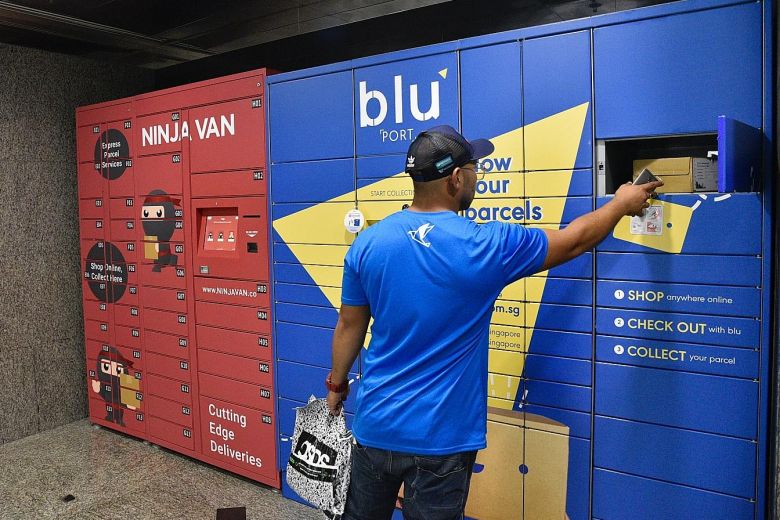
I can see the need for more parcel lockers to be set up near housing estates. Sometimes deliveries get delayed because residents are not at home to receive the parcel or they don’t hear the courier at the door. This would require rescheduling another delivery date. I also remember occasions when I would receive a delivery note in my mailbox to pick up a package from a POPstation, which is a 30 minute round trip by bus and foot from my home, when I had made it a point to be home when the original delivery was made.
The pandemic, ironically, seems to have eased this problem, because couriers now simply leave the package outside the door in the name of “contactless delivery”, to prevent the spread of the virus. However, I worry that these delivery issues may return once safe management measures ease. In any case, especially in public housing estates, leaving packages unattended at the door risks parcel theft. I therefore support the plans to situate more parcel lockers near housing estates.
However, I have several queries which I hope the SMS will address. These cover the effect of the creation of a public parcel locker network (Network) on market competition and innovation, and the coverage of parcel lockers in all housing estates.
Market competition
First, on market competition. While I welcome the creation of the Network, I would like more clarity on the role of Pick Network Pte Ltd in the existing ecosystem. Pick is a wholly-owned subsidiary of IMDA, which is a government statutory board.
SingPost already has POPstations and Blu World Pte Ltd has a network of blu lockers. They are part of an existing parcel locker network, the Locker Alliance, which has already set up parcel lockers in various locations across Singapore. What was the reason why IMDA didn’t contract these private sector players to provide more public parcel lockers near housing estates? They already have the experience of running parcel lockers and could take on the investment risk and bear the cost of expanding their network.
Is Pick’s mandate to fulfil a need that is distinct and complementary to the services already being provided by the private parcel locker providers, or will it be competing with them? If competition is part of its mandate, will it be contravening the “Yellow Pages” rule? This rule dictates that government agencies should exit from market segments which already have active private sector players. I note that the SMS said that it is not the Bill’s intent for Pick to compete with Delivery Service Partners (DSP), but does this non-competition extend to providers of parcel lockers?
Going back to first principles, I would also like to find out more information about the process by which Pick was created and contracted to run the Network. Was there a public tender for the deployment and operation of a public locker network, which Pick eventually won? How long will the initial contract be for? Are there plans for a subsequent tender in which another public postal licensee or licensees can participate in?
Is Pick expected to be profitable in the future? If not, how much has IMDA spent and how much will it be budgeting every year to subsidise the operations of Pick?
Coverage of parcel lockers
Next, I have some questions for the SMS about the location and coverage of the Network lockers.
While residents living in HDB estates will be served by the Network, how will the Network be implemented in condominiums and landed estates, if at all?
Will parcel lockers be set up in condos or in public spaces near condos? Given that 16% of resident households live in condos, we should strive to ensure coverage of this segment. Another 5% of residents live in landed housing. Will they be served by public parcel lockers?
Maintenance and cleanliness of lockers
I understand that Pick will be in charge of the maintenance of these lockers. Given the Covid-19 situation, Pick should arrange for their own disinfection and cleaning of the high-touch surfaces of these lockers regularly.
Also, I hope that Pick clearly indicates their customer support contacts on their lockers and makes it convenient for customers to get in touch with them. This is so that town councils or MPs don’t get calls from members of the public to fix malfunctioning lockers.
There may also be certain individuals who are heavy users of delivery services, for example people who run small redistribution businesses from their homes. What measures are in place to prevent overuse by these individuals who could end up monopolising the limited slots?
Conclusion
Mr Speaker, the public parcel locker network should fill in the gaps which the private sector is unable to fill, rather than duplicate their coverage. It should seek to drive innovation in the sector. For example, perhaps in the future we could see the creation of cold lockers to facilitate the delivery of groceries and foodstuffs from supermarkets, or heated lockers for food deliveries. Locker operators could also consider providing dual functions for their lockers, for example, as receptacles for returned items, or even for depositing electronic waste, given that existing e-waste bins are even less accessible than private parcel lockers.
The creation of the Network should ultimately drive the industry forward and serve the public interest — given that public funds have already been used towards its creation. ROI must come in the form of more convenient and affordable parcel pick-ups for consumers, not just profits for a select few players, whether publicly- or privately-owned.
The horrific death of a migrant domestic worker has highlighted these workers’ vulnerability at the hands of abusive employers. The wider community also has a part to play in preventing and reporting suspected abuse. This morning (8 March 2021), I asked the Minister for Manpower a number of questions on this matter:
1. What education is currently provided to the employers of migrant domestic workers about duties of care and behaviour that may constitute abuse?
2. What recourse do domestic workers and bystanders have should they experience or witness abuse?
3. What is being done to actively reduce abuse and review such frameworks for improvement?
There is currently a six-monthly medical examination which, according to the MOM website, screens for pregnancy and infectious diseases. In her reply to me, Minister of State Gan Siow Huang said that doctors also check for signs of abuse. In response, I asked her further supplementary questions:
4. What are the professional or legal consequences for doctors who fail to report suspected abuse of their migrant domestic worker patients? Are there plans to increase the penalties for non-reporting?
5. Does MOM screen prospective employers of FDWs for potential red flags in for example, past incidents of violent behaviour, police reports made against them, and so on?
6. How would an abused domestic worker who has no phone or off-day report their abuse?
Her answers will be published in the Parliament Hansard.
Transparency of MediShield Life premium calculations
On 1 March 2021, higher premiums and coverage for MediShield Life health insurance kicked in. I raised the issue of transparency of these changes again in Parliament, on 5 March. This is what I said:
Between 2016 to 2019, $7.5 billion in premiums for MediShield Life were collected and $3.5 billion in claims were paid out, while a further $3 billion was set aside for future premium rebates.
Many Singaporeans are concerned about the premium hikes of up to 35% to MediShield Life. More transparency on the data and assumptions used will help better explain these premiums hikes.
Last November, in response to my request for the release of the full MediShield Life actuarial report, SMS Koh Poh Koon said that MOH may engage different consultants to challenge the assumptions and do another calculation, and publish some of this data “in an academic way”.
Will the full MediShield Life actuarial report be provided to these consultants and academics for further analysis and, if so, when will this be done?
Lastly, I note that the new MediShield Life premiums kicked in on 1 March. Can MOH consider postponing the increased premiums until our economy recovers?
Many seniors suffer from chronic conditions which require extended care that can be very expensive. Most outpatient treatment is not covered by Medishield Life, and access to Medifund is only available to the very low income. The use of Medisave is subject to annual withdrawal caps. This can have the undesirable effect of discouraging seniors from seeking early treatment.
Can MOH allow MediSave withdrawals for the treatment of all chronic conditions, not just those on the Chronic Disease Management Programme list, to ensure that no one is excluded just because they suffer from a less common chronic condition.
Can MOH remove annual withdrawal limits on the use of MediSave for patients over 60 who have a balance of at least $5,000 in their MediSave accounts?
This can be rolled out at polyclinics, restructured hospitals and CHAS clinics, where tight procedures are already in place to ensure that only medically-necessary treatment is prescribed.
Senior Minister of State Koh Poh Koon responded to my cut, but did not announce any further liberalisation of the use of MediSave. Following the ministers’ responses, I raised further clarifications:
What is the Ministry’s main concern about allowing greater use of Medisave in polyclinics, SOCs and restructured hospitals? I know MOH is worried about the premature depletion of patients’ Medisave. However Medisave can only be withdrawn for medically-necessary treatment.
The risk of doctors in these public institutions over-treating is minimal. Patients there also have little discretion to demand unnecessary treatment.
On the flip side, patients do retain the discretion to skip treatment to reduce OOP payments. This will impact the success of their treatment and may cost both the patient and the government more in the long term.
Can MOH re-consider how prudent it still is to restrict the use of Medisave in public healthcare institutions?
The SMS responded that MOH is open to further liberalisation of the use of MediSave. His full reply will be published in the Parliament Hansard.
Minister for Home Affairs and Law K Shanmugam made a ministerial statement today (5 March 2021) outlining MHA and MinLaw’s efforts to protect victims of hurt and sexual crimes. After his statement, I sought the Minister’s clarifications on MinLaw’s efforts to protect victims of workplace sexual harassment, which is also very serious.
An Aware-Ipsos survey in Nov 2020 found that 40% of workers in Singapore said they had been sexually harassed at the workplace but only 3 in 10 of them officially reported it. Many were reluctant to report their harassment because of the fear of not being believed or being blamed for bringing it upon themselves.
I asked Minister Shanmugam:
Has the Government done any victimisation surveys of its own to uncover the extent of workplace sexual harassment in Singapore and, if so, what are its findings?
Are there plans to table legislation to oblige employers to prevent and address workplace sexual harassment?
I know TAFEP has issued a Tripartite Advisory on Managing Workplace Harassment, which is quite comprehensive. However, this is only an advisory and not a statutory requirement. Employers can choose to ignore them.
I also understand that we have the Prevention of Harassment Act (POHA). However that requires the victim file for a court order, which may be too onerous for them.
Would it be better to give the TAFEP advisory more teeth?
Among his replies, the Minister said that where it concerns employers’ obligations to deal with workplace sexual harassment, this falls under the purview of Ministry of Manpower. He invited me to file a Parliamentary Question for MOM, which I will.
Efficient and convenient public transport is vital to achieving many national priorities. It allows HDB to build more flats away from the city; it enables workers to travel to further-out workplaces; and it helps us reach our climate change goals.
I sold my car five years ago and now make most of my trips by bus and MRT. I have not regretted this decision and highly recommend it to others who can afford not to drive.
Improving the commuter experience can convince more people to take public transport — reducing both traffic congestion and carbon emissions.
How can we nudge more people towards going car-lite? I have a few suggestions:
First, reduce the amount of walking needed during the journey. Singapore’s tropical weather is not conducive to walking outdoors for long distances while dressed up for work. Transport planners should keep this in mind when planning the location of bus stops and the routes of feeder bus services. For example, some of my HDB and condo residents living along Bedok Reservoir Road do not have a direct feeder bus to the nearby Bedok North MRT and have a rather long walk to and from the station.
Second, construct more covered linkways from housing estates, including private condominiums, to transport nodes. Covered linkways can influence a commuter’s decision whether to brave the elements or take private transport.
Third, reduce crowding on trains and buses so that commuters have a more comfortable ride with better safe-distancing. I hope MRT operators will also stop removing seats from their train cars, because we commuters like sitting during our rides!
And fourth, continue to make our roads and public transport more accessible for people with disabilities. I had earlier suggested how we should use tactile signals to enable visually-impaired commuters to cross roads late at night. I look forward to that being implemented.